

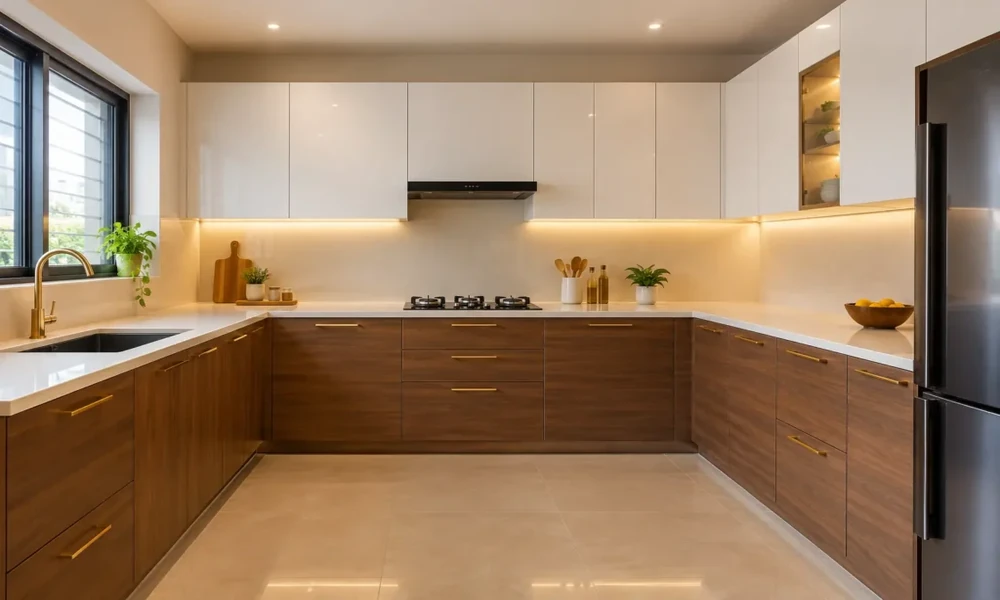
The colour and finish of the shutters are the main feature of cabinets, but other finishing details can also affect the final product’s appearance. Edge banding can help achieve contrast, create shapes, and enhance furniture looks. If made to work with the acrylic shutters, it can help turn a simple cabinet into an exceptional architectural element.
Regardless of whether one uses a black edge over white acrylic or metals against dark finishes, the right combination can add depth without any complicated patterns. It is essential to balance edge colour with the shutter surface, other materials, and the interior style.
The Design Appeal of Contrasting Edge Banding
The contrast edge banding acrylic design approach is based on the contrast in colour between the shutter surface and its edges. Instead of the edge blending in, the contrasting colour becomes part of the furniture appearance. This design is perfect for modern kitchens, closets, entertainment centers,and similar furniture pieces, creating a clean and flat face of the surfaces.
When it comes to contrast, the possible effects are numerous. A narrow dark edge around the bright shutter creates a delicate outline, while the striking difference in colour makes the cabinet fronts look more graphic. Uniform thickness and colour of edge banding help achieve harmony when using several shutters.
Two-Tone Acrylic Door Edging for Contemporary Furniture
Two-tone acrylic door edging allows you to have a second shade without changing the whole cabinet door. For instance, white or ivory shutters and a charcoal edge will render a clean modern look. Such effects can be achieved with kitchen cabinets, wardrobes, and storage furniture using acrylic shutters.
While choosing the appropriate edge color, it is important to keep in mind the finishes of the surrounding elements and furniture. If the interior already contains contrasting floor materials, metal handles, or fancy wall panels, restrained edge colour will keep the furniture looking right. In case the background is simpler, bolder edge colour may serve as the main element.
Black Border Acrylic Shutters: A Bold Architectural Detail
A black border acrylic shutter enjoys great popularity because of its obvious frame effect. The black outline makes a strong contrast with white, beige,e or light grey acrylic and emphasizes the shape of each shutter. Such an approach usually works in minimalist design where the focus is on geometry, finishes, and colours rather than décor elements.
A black border can also be used in conjunction with darker shades. For example, dark borders will look good with navy, charcoal, and dark green acrylic. To eliminate a cluttered look, be sure to keep the same width of borders and not add too many new accent colours.
Choosing Colours and Finishes That Work Together
The effectiveness of two-tone edging is dictated by how the colours interact with the surface of acrylic and the general palette of the interior.Glossy finishes reflect light and highlight colour differences, while matt finishes create a more toned-down look. The edge finish must be picked according to both the surface of the shutters and the desired effect from such a finish.
Take into account the following combinations when designing:
- White acrylic with black edging: a clean combination, suitable for modern kitchens and wardrobes.
- Beige acrylic with walnut edges: an option adding warmth to the interior and matching wood materials.
- Grey acrylic with charcoal edge finish: a calm appearance.
- Navy acrylic with metallic finishing: a sophisticated touch for statement cabinetry.
It is advisable to compare the finishes in a physical form, as light conditions change.
Integrating Architectural Edge Trim in Cabinets
Architectural edge trim cabinets can be done by coordinating the shutter edges with other elements of the furniture. The edging can be in harmony with the handle finishes, open shelf frames, decorative channels, and wall panels,ensuring the stylish unity of the whole interior.
Still, it is important to remember that design is to be proportional to the size of the cabinet. Narrow edges work better with minimalist flat surface shutters. Wider edges will work better on bigger furniture where a lot of presence is needed. Good work on edges across all the doors and drawers will also ensure the style of arrangement.
Practical Considerations for Edge Banding
Edge banding serves not only aesthetic functions. It also plays a role in finishing and protecting exposed edges of the panels.
Material, glue, method of applying, and material of laminating of edge banding must be suitable to the construction of the shutters and their environment. Issues of the kitchen cabinetry include concerns about water, heat, and handling.
The proper application is important for obtaining neat corners and correct fitting. Inadequate quality of edge finishing a lot of aesthetics will be lost.
Conclusion
Contrasting edge banding offers a simple yet effective way to personalise acrylic shutters and introduce two-tone detailing into contemporary furniture. From black borders on light acrylic to warmer combinations with wood-inspired finishes, the right edging can emphasise cabinet geometry and create a coordinated interior. With careful colour selection, consistent proportions and suitable installation methods, edge accents can enhance both the appearance and practicality of acrylic cabinetry.
