

By late August, plenty of Texas yards have cracks wide enough to swallow a pencil. Clay soil that swelled with spring rain shrinks as it dries, pulling away from the edges of the foundation and leaving the concrete slab to settle unevenly. Most people see that as a lawn problem. The water and drain lines buried under that slab feel it very differently, because every inch of movement in the soil eventually tugs, bends or rubs against the pipes running through it.
Homeowners in Southeast Texas and around Round Rock who have dealt with a hidden leak under concrete often end up calling Marathon Plumbing, a licensed team with more than 15 years of work in both regions that handles slab leak repair, pipe replacement and the sewer and drain lines that sit below the foundation. Their experience points to a simple truth that the rest of this piece unpacks. Slab leaks in Texas are rarely random, and the soil usually explains more than the pipe does.
Understanding how that happens makes it far easier to catch a leak early and choose the right fix when one shows up.
Two Clays With the Same Bad Habit
Southeast Texas sits on what geologists call the Beaumont Formation, a dense, sticky clay that locals simply call gumbo. It holds water stubbornly, swells hard when saturated and stays wet for long stretches thanks to Gulf humidity and a shallow water table. When a dry spell finally arrives, it shrinks just as dramatically.
Around Round Rock and the rest of Williamson County, homes sit on Blackland Prairie clay. This soil can crack several feet deep during drought, then heave upward after a few heavy storms. Two regions, two different soils, but the same rhythm of swelling and shrinking. A slab poured on either one moves a little every season, and the pipes beneath it have no choice but to move along.
What Actually Lives Beneath the Concrete
Two separate systems run under most slab homes. The supply side carries pressurized water to every fixture, and in older houses that usually means soft copper. Newer homes often use PEX, which flexes better but can still be damaged where it passes through concrete or meets a fitting.
The drain side is gravity fed. Homes built before the mid 1970s in towns like Nederland and Port Neches often still have cast iron drains, which scale up inside, rust from the outside and eventually crack. Later homes moved to PVC or ABS plastic, which resists corrosion but can separate at joints when the soil shifts.
Each pipe fails in its own way. Copper tends to develop pinholes from water chemistry or wears thin where it rubs against concrete as the house expands and contracts with temperature. Cast iron gives up slowly through cracks and broken hubs. Plastic drains tend to belly, sag or pull apart. Knowing which material is under your floor tells you a lot about what kind of leak you are likely to face.
The House Usually Gives It Away First
Slab leaks are hidden, but they are rarely silent. Before any water reaches the surface, a home tends to drop hints like these.
- A warm patch on tile or wood flooring usually points to a hot water line leaking beneath it, since the escaping water heats the concrete above.
- A water bill that climbs without any change in household habits often means water is going somewhere you cannot see.
- The faint sound of running water when every faucet is closed is worth taking seriously, especially at night when the house is still.
- Damp carpet along a wall, or baseboards that swell and soften, can signal moisture wicking up through the slab.
- New cracks in drywall or tile, along with doors that suddenly stick, may reflect soil washing out or swelling under one section of the foundation.
- Slow drains throughout the house or a sewer smell near floor level can mean a broken drain line under the concrete.
None of these clues proves a slab leak on its own, but two or three together deserve a closer look.
Finding a Leak Nobody Can See
There is one test any homeowner can run. Shut off every fixture, note the reading on the water meter, wait an hour without using water, and check again. If the numbers moved, water is escaping on the supply side somewhere.
From there, a plumber narrows things down by isolating the hot and cold lines, pressure testing each section, and listening along the floor with acoustic equipment that picks up the hiss of water forcing its way out of a pipe. Thermal imaging helps trace hot water leaks, and line locators map exactly where pipes run so nobody breaks concrete in the wrong spot.
Drain leaks need a different approach since the lines are not under pressure. The usual method is a hydrostatic test, where the main drain is plugged at the cleanout and the system is filled with water. If the level drops, something is leaking. A camera run through the line then shows where the break, belly or root intrusion sits.
Three Ways to Reach the Problem
Once the leak is located, the repair choice depends on where it is, what the pipe looks like, and how many more failures are waiting nearby.
Going straight down through the floor
Cutting a small opening in the slab directly above the leak is often the quickest and least expensive route when there is a single break in otherwise healthy pipe. The tradeoff is losing a section of flooring, which can hurt if it sits under hardwood or tile that is hard to match.
Tunneling in from outside
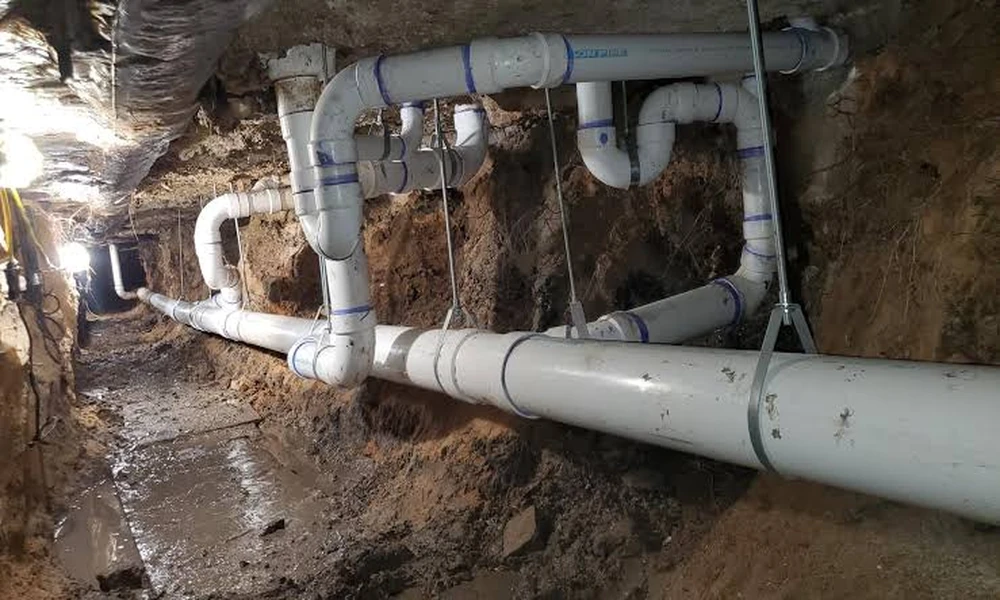
For drain lines running under the middle of a house, crews sometimes dig a tunnel from the exterior and reach the pipe without touching the floors at all. It takes longer and costs more in labor, but it keeps the inside of the home livable during the work.
Leaving the old line behind
When copper has already leaked once and shows thinning elsewhere, rerouting the water line through the attic or walls makes more sense than chasing one pinhole after another. The old pipe is abandoned in place, and future leaks become visible and easy to reach. For aging drains, replacing a full section or lining the pipe can be the longer lasting answer.
Who Pays for Breaking the Concrete
Insurance is where many homeowners get surprised. Policies in Texas often treat the leaking pipe, the damage the water caused, and the cost of tearing out the slab to reach the pipe as three separate questions. The Texas Department of Insurance has long addressed tear out coverage for accessing plumbing leaks as its own category, which is why reading your policy language before any concrete gets cut is worth the effort. Sudden failures tend to be treated more favorably than gradual leaks, so photos, meter readings and a written report from the plumber all help when filing a claim.
Keeping the Soil From Starting the Next Leak
Because soil movement drives so many of these failures, the best prevention happens outside. Keeping the ground around the foundation evenly moist during long droughts, often with a soaker hose set a short distance from the slab, limits the shrink and swell cycle that stresses pipes. Gutters that carry roof water well away from the house help during the wet months, and large trees planted close to the foundation can pull moisture unevenly from one side.
Inside, water pressure matters more than most people realize. Pressure above 80 psi puts extra strain on every joint and pipe wall, and a pressure reducing valve is a modest investment compared with breaking up a floor. Pair that with an occasional meter check and attention to the small clues a house gives off, and a slab leak is far more likely to be caught as a minor repair instead of a major one.
