

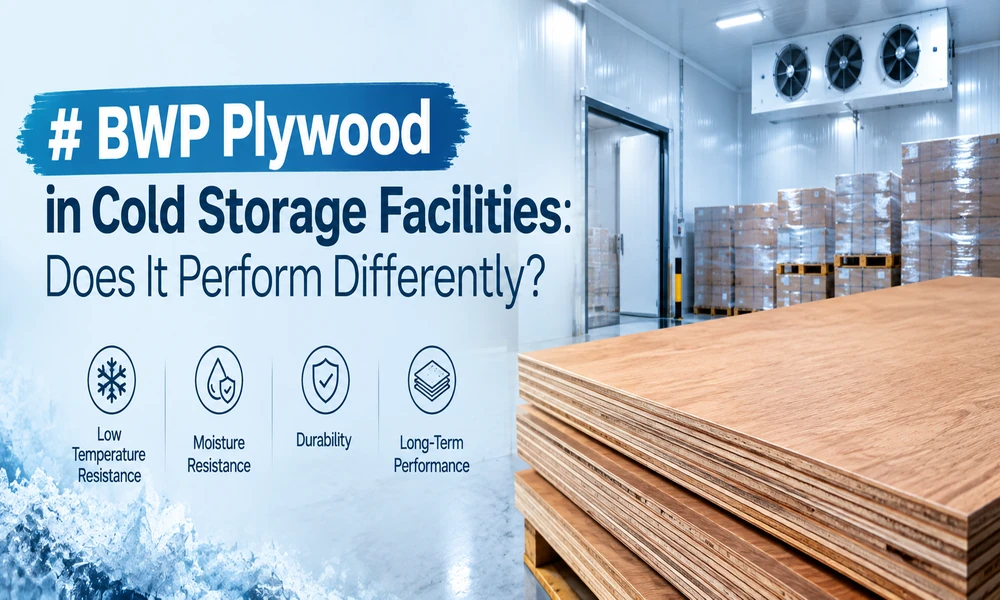
Cold storage facilities are very demanding on building materials. When exposed to moisture for long periods, at low temperatures, high humidity, condensation and repeated movement between cold and warmer areas, plywood can be susceptible. “So, the practical question for buyers is, does Boiling Waterproof plywood behave differently in a cold storage environment?”
Boiling Waterproof Plywood, or BWP plywood,d is designed to withstand extreme moisture exposure and is better suited for moisture-prone applications than standard interior plywood. But cold storage creates conditions to be taken into account separately. Waterproofing helps control moisture, but it doesn’t automatically make all BWP products suitable for all cold-room applications.
Importance of Moisture Resistance in Cold Storage
In a cold storage plant, the issue with plywood is not just the temperature but the moisture. Condensation and humidity can add water to areas where plywood is used for interior components such as cabinets, partitions, storage structures or the like.
The material given says BWP plywood is made up of many layers of wood veneers glued together with phenol-formaldehyde resin. It is treated for humidity and boiling water and given chemical treatment to take care of pests, fungi and bacteria in moisture-prone areas. Because of these characteristics, Boiling Waterproof plywood is a better choice than interior plywood grades where exposure to moisture is expected frequently.
Does the BWP Performance Change at Low Temperature?
No data are provided in the source material on the cold-temperature performance of BWP plywood. It does not establish a specific minimum operating temperature, number of freeze-thaw cycles, or cold-storage service rating.
This means that purchasers should not assume that BWP designation means that waterproof plywood is suitable for all cold room applications. The real environment, the expected condensation, installation method, ventilation and exposure conditions must be considered. BWP offers resistance to moisture. Cold-storage performance as a system must be considered beyond the plywood grade itself.
How BWP Construction Aids in Moisture-Prone Areas
When you can’t avoid moisture, Boiling Waterproof plywood’s construction comes into play. In the manufacturing process of the supplied material, waterproof glue and chemical treatment are important elements. It also says BWP plywood is good for kitchens, bathrooms, furniture that will get wet and semi-outdoor conditions.
This resistance to moisture can be helpful for components used in cold storage that might come into contact with humidity or condensation. But exposed edges, joints and cut surfaces still require attention during fabrication, as the performance of a finished installation depends on the complete assembly rather than the plywood sheet alone.
BWP or Marine Plywood for Cold Storage?
Marine Plywood is not the same grade as BWP. The material supplied is intended for use in applications where exposure to moisture may occur, whereas Marine Plywood is intended for extreme and prolonged exposure to water,including marine environments. The source also states that marine plywood has a completely void-free veneer construction.
The choice for a cold storage facility should be made on the basis of actual exposure. If the application is mostly humidity and condensation, BWP could be a good moisture-resistant option. Marine Plywood may be specified if a component is exposed to water for a long time or is in a very harsh environment. The source does not provide a specific cold-storage grade recommendation; suitability is to be confirmed against the project requirements.
BWP in Cold Rooms | What to Check Before Using BWP?
First, determine where the plywood is going and what it will be exposed to. Consider the humidity, condensation, cleaning methods, temperature conditions and duration of exposure. Check the plywood grade, manufacturer specifications and relevant certification.
Buyers of products like Royale Touche Boiling Waterproof plywood should consider the documented construction and intended applications, not just the word “waterproof”. Edges, joints and fixings that are exposed or poorly protected are also an entry point for moisture, so proper detailing around these areas is important.
Conclusion
Boiling Waterproof plywood is a wise option for components of cold storage where moisture resistance is an important factor. The waterproof bonding system and treatment for moisture-prone environments are the key features of this plywood.
Simultaneously, BWP should not be automatically treated as material for cold storage. The information provided does not include specific performance data at low temperatures or repeated freeze-thaw conditions. For difficult cold-room projects, the buyer should match the plywood specification to the actual temperature, moisture and installation conditions and check with the manufacturer for suitability prior to use.
