

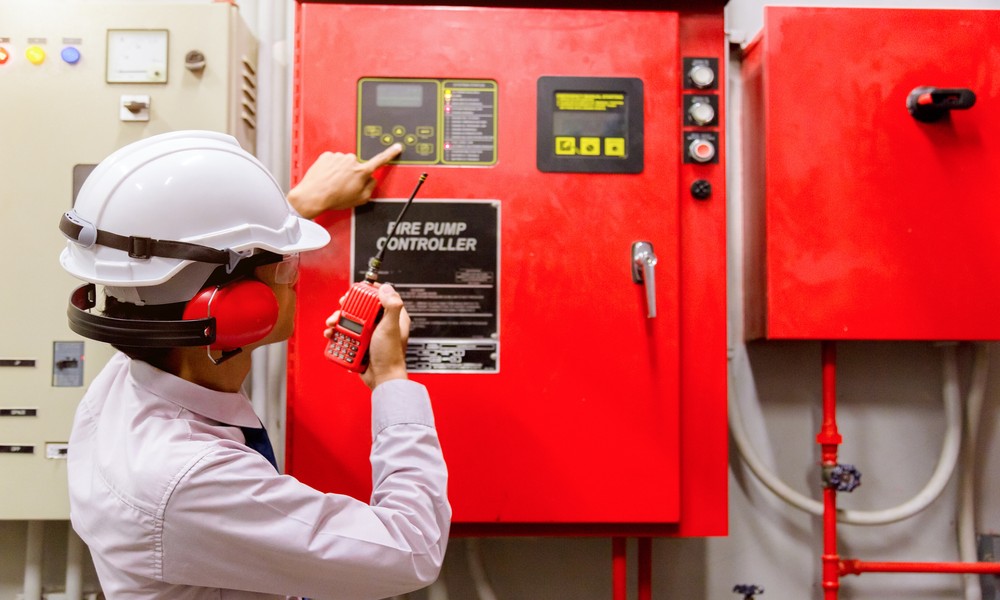
In an emergency, clear and reliable communication can mean the difference between life and death. Firefighters, police officers, and medical teams must be able to talk to each other at all times, no matter where they are inside a building. A BDA Fire Alarm System, also known as a BDA DAS or ERCES, exists to make sure that emergency responders can communicate clearly without signal loss or interruption.
Many modern buildings make radio and cellular signals weaker. Thick walls, concrete, steel, underground areas, glass coatings, and large building sizes all reduce signal strength. During emergencies such as fires, earthquakes, or power failures, communication problems become even worse. A Bi-Directional Amplifier (BDA) solves this problem by boosting radio signals and spreading them throughout the building so first responders can hear and be heard when it matters most which is why so many companies are turning to BDA fire alarm systems.
Simply put, a fully working BDA DAS / ERCES helps save lives, protect property, and support emergency teams during critical moments.
How a BDA DAS Works
A BDA DAS strengthens radio signals and sends them throughout a building using a Distributed Antenna System (DAS). The system allows signals to travel both into and out of the building, which is why it is called “bi-directional.”
The process works like this:
- A signal is captured from outside the building
- The BDA boosts that signal
- The DAS spreads the signal evenly across the entire structure
This setup ensures that emergency responders can communicate clearly in stairwells, basements, parking garages, elevators, and upper floors. Without this system, many of these areas would be communication dead zones.
Main Components of a BDA DAS / ERCES
A complete ERCES includes several key parts that work together to ensure strong and stable communication.
Donor Antenna
The donor antenna is usually placed at the highest point of the building, such as the roof. It receives radio signals from nearby public safety towers and sends them to the BDA.
Bi-Directional Amplifier (BDA)
The BDA boosts weak radio signals so they can travel farther and stronger inside the building. This is the core of the entire system.
Distributed Antenna System (DAS)
The DAS is made up of indoor antennas placed throughout the building. These antennas spread the boosted signal to all areas, ensuring full coverage.
Indoor Antennas
Indoor antennas come in different types, such as:
- Omni-directional antennas for wide coverage
- Directional antennas for focused areas
- Low-profile antennas for clean and discreet designs
Their placement is carefully planned to remove dead zones.
Battery Backup Units (BBU)
Power loss often happens during emergencies. Battery backup units ensure the system continues working even if the main power fails.
Dedicated Monitoring Panel
Every ERCES has its own monitoring panel separate from the fire alarm panel. It shows system health, power status, battery condition, and alerts if something is wrong.
RF Filters
RF filters help reduce noise and prevent unwanted signals from interfering with emergency communications.
Failure Alarms
These alarms alert building staff and responders if part of the system stops working, allowing quick repairs.
BDA Fire Alarm System and Common Terms Explained
You may hear terms like:
- BDA Fire Alarm
- BDA Radio System
- BDA Fire Alarm System
- BDA DAS
All of these refer to the same idea: a system designed to support emergency communication inside buildings. The BDA Fire Alarm System often connects with the fire alarm system to report faults, power loss, or system failures.
Types of BDA DAS / ERCES Systems
There are different types of BDA systems, and the right one depends on the building’s needs.
Full-Duplex vs Half-Duplex
- Full-duplex systems can send and receive signals at the same time
- Half-duplex systems can only send or receive one at a time
Class A vs Class B Systems
- Class A (channelized) systems boost only specific approved frequencies
- Class B (broadband) systems boost a wider range of frequencies
Local fire departments and authorities usually decide which type is required.
Where BDA DAS / ERCES Are Required
BDA systems are now required in most places where people gather. These include:
- Office buildings
- Schools and college campuses
- Apartments and condominiums
- Hospitals and senior care facilities
- Hotels and resorts
- Stadiums and arenas
- Airports and transportation hubs
- Warehouses and factories
- Parking garages
- Shopping malls and retail spaces
If you are inside a newer large building, it likely already has an ERCES installed.
Why BDA DAS / ERCES Are So Important
Improved Public Safety
Clear communication helps first responders rescue people faster, control emergencies, and stay safe themselves.
Code Compliance
Most buildings must meet fire and safety codes such as NFPA 72, NFPA 1221/1225, IFC 510, and UL 2524. A proper BDA system helps meet these rules.
Reliable Communication
Past emergencies have shown how dangerous communication failures can be. Buildings should help emergency efforts, not make them harder.
Future-Ready Buildings
Modern materials like Low-E glass block signals. A BDA DAS is designed to overcome today’s challenges and adapt to future building designs.
Peace of Mind
Everyone benefits:
- Building owners
- Property managers
- Security teams
- Employees and visitors
- First responders
Choosing the Right BDA DAS / ERCES
Every building is different, so each system must be designed carefully.
Coverage Requirements
Fire codes clearly state how much of a building must have strong signal coverage. Testing is done to find weak areas and plan antenna placement.
Equipment Quality
All components must meet safety standards and survive harsh conditions like heat, smoke, water, and vibration.
System Compatibility
The system must work with local emergency radio frequencies and existing fire alarm equipment.
Scalability
A good system can grow with the building, allowing future upgrades or expansions.
Remote Monitoring
Remote monitoring helps catch problems early and reduces repair time and cost.
Maintenance Needs
ERCES systems require:
- Annual inspections
- 5-year inspections
- Ongoing testing and maintenance
Installation and Compliance Considerations
Planning and Surveys
Installation starts with detailed signal testing and building surveys. This helps determine equipment placement and cable routing.
Code and Regulation Compliance
Proper permits, inspections, and documentation are required. The system must follow fire codes, FCC rules, and local laws.
Testing and Verification
Systems must be tested during installation and regularly after. Third-party testing is often required for approval.
Staff Training
Building staff should understand:
- How the system works
- What alarms mean
- Basic troubleshooting
- Emergency procedures
Different staff roles require different levels of training.
Final Thoughts
A BDA DAS / ERCES is not just another building system—it is a life-saving tool. By supporting clear communication during emergencies, it helps first responders do their jobs safely and effectively. Proper planning, correct equipment, skilled installation, and ongoing maintenance are essential to keeping the system reliable.
With the right BDA Fire Alarm System in place, a building becomes part of the solution during emergencies, not part of the problem.
